Thursday, September 3, 2015

Evolution of Mind Control and MK-ULTRA

DailyDDoSe: The Evolution of Project Monarch & MK-ULTRA

The Evolution of Project Monarch & MK-ULTRA

bibliotecapleyades.net

With the CIA and National Security Council firmly established, the first in a series of covert brain-washing programs was initiated by the Navy in the fall of 1947.

Project CHATTER was developed in response to the Soviet's "successes" through the use of "truth drugs." This rationale, however was simply a cover story if the program were to be exposed. The research focused on the identification and testing of such drugs for use in interrogations and the recruitment of agents.[5] The project was officially terminated in 1953.

The CIA decided to expand their efforts in the area of behavior modification, with the advent of Project BLUEBIRD, approved by director Allen Dulles in 1950.

Its objectives were to:

(1)   discover a means of conditioning personnel to prevent unauthorized extraction of information from them by known means

(2)   investigate the possibility of control of an individual by application of special interrogation techniques

(3)   investigate memory enhancement

(4)   establish defensive means for preventing hostile control of agency personnel

In August 1951, Project BLUE BIRD was renamed Project ARTICHOKE, which evaluated offensive uses of interrogation techniques, including hypnosis and drugs.

The program ceased in 1956. Three years prior to the halt of Project ARTICHOKE, Project MK-ULTRA came into existence on April 13, 1953 along the lines proposed by Richard Helms, Deputy Director of Central Intelligence (DDCI) with the rationale of establishing a "special funding mechanism of extreme sensitivity."[6]

The hypothetical etymology of "MK" may possibly stand for "Mind Kontrolle." The obvious translation of the German word "Kontrolle" into English is "control."[7] A host of German doctors, procured from the post war Nazi talent pool, were an invaluable asset toward the development of MKULTRA. The correlation between the concentration camp experiments and the numerous sub-projects of MKULTRA are clearly evident.

The various avenues used to control human behavior under MKULTRA included:

  • radiation

  • electroshock

  • psychology

  • psychiatry

  • sociology

  • anthropology

  • graphology

  • harassment substances

  • paramilitary devices

  • materials "LSD" being the most widely dispensed "material"

A special procedure, designated MKDELTA, was established to govern the use of MKULTRA abroad. MKULTRA/DELTA materials were used for harassment, discrediting or disabling purposes.[8]

There were 149 subprojects listed under the umbrella of MKULTRA. Project MONARCH has not been officially identified by any government documentation as one of the corresponding subprojects, but is used rather, as a descriptive "catch phrase" by survivors, therapists, and possible "insiders".

MONARCH may in fact, have culminated from MKSEARCH subprojects such as operation SPELLBINDER, which was set up to create "sleeper" assassins (ie. "Manchurian candidates") who could be activated upon receiving a key word or phrase while in a post-hypnotic trance.

Operation OFTEN, a study which attempted to harness the power of occultic forces was possibly one of several cover programs to hide the insidious reality of Project MONARCH.


Definition and Description

The name MONARCH is not necessarily defined within the context of royal nobility, but rather refers to the monarch butterfly.

When a person is undergoing trauma induced by electroshock, a feeling of light-headedness is evidenced; as if one is floating or fluttering like a butterfly. There is also a symbolic representation pertaining to the transformation or metamorphosis of this beautiful insect: from a caterpillar to a cocoon (dormancy, inactivity), to a butterfly (new creation) which will return to its point of origin. Such is the migratory pattern that makes this species unique.

Occultic symbolism may give additional insight into the true meaning Psyche is the word for both "soul" and "butterfly" coming from the belief that human souls become butterflies while searching for a new reincarnation. [9]

Some ancient mystical groups, such as the Gnostics, saw the butterfly as a symbol of corrupt flesh. The "Angel of Death" (remember Mengele?) in Gnostic art was portrayed crushing the butterfly.[10]

A marionette is a puppet that is attached to strings and is controlled by the puppet master, hence MONARCH programming is also referred to as the "Marionette Syndrome." "Imperial Conditioning" is another term used, while some mental health therapists know it as "Conditioned Stimulus Response Sequences."

Project MONARCH could be best described as a form of structured dissociation and occultic integration, in order to compartmentalize the mind into multiple personalities within a systematic framework. During this process, a Satanic ritual, usually including Cabalistic mysticism, is performed with the purpose of attaching a particular demon or group of demons to the corresponding alter(s).

Of course, most skeptics would view this as simply a means to enhance trauma within the victim negating any irrational belief that demonic possession actually occurs.


Alters and Triggers

Another way of examining this convoluted victimization of body and soul is by looking at it as a complex computer program: A file (alter) is created through trauma, repetition and reinforcement. In order to activate (trigger) the file, a specific access code or password (cue or command) is required.

The victim/survivor is called a "slave" by the programmer/handler, who in turn is perceived as "master" or "god." About 75% are female, since they possess a higher tolerance for pain and tend to dissociate easier than males. Subjects are used mainly for cover operations, prostitution and pornography; involvement in the entertainment industry is notable.

A former military officer connected to the DIA, told this writer,

"In the 'big picture' these people [MONARCH victims] are in all walks of life, from the bum on the street to the white-collar guy".

In corroboration, a retired CIA agent vaguely discussed the use of such personnel to be used as "plants" or "chameleons" for the purpose of infiltrating a designated group, gathering information and/or injecting an ulterior agenda.

There are an inordinate amount of alters in the victim/survivor with numerous back-up programs, mirrors and shadows. A division of light-side (good) and dark-side (bad) alters are interwoven in the mind and rotate on an axis. One of the main internal structures, (of which their are many) within the system is shaped like a double-helix, consisting of seven levels. Each system has an internal programmer which oversees the "gatekeeper" (demons?) who grant or deny entry into the different rooms.

A few of the internal images predominately seen by victims/survivors are:

  • trees

  • the Cabalistic "Tree of Life," with adjoining root systems

  • infinity loops

  • ancient symbols and letters

  • spider webs

  • mirrors or glass shattering

  • masks

  • castles

  • mazes

  • demons/monsters/aliens

  • sea shells

  • butterflies

  • snakes

  • ribbons

  • bows

  • flowers

  • hour glasses

  • clocks

  • robots

  • chain-of-command diagrams

  • schematics of computer circuitry boards


Bloodlines and Twinning

A majority of the victims/survivors come from multi-generational Satanic families (bloodlines) and are ostensibly programmed "to fill their destiny as the chosen ones or chosen generations" (a term coined by Mengele at Auschwitz).

Some are adopted out to families of similar origin. Others used in this neurological nightmare are deemed as he "expendable ones" (non-bloodliners), usually coming from orphanages, foster care homes, or incestuous families with a long history of pedophilia.

There also appears to be a pattern of family members affiliated with government or military intelligence agencies.

Many of the abused come from families who use Catholicism, Mormonism, or charismatic Christianity as a "front" for their abominable activities (though members of other religious groups are also involved.) Victims/survivors generally respond more readily to a rigid religious (dogmatic, legalistic) hierarchical structure because it parallels their base programming. Authority usually goes unchallenged, as their will has been usurped through subjective and command-oriented conditioning.

Physical identification characteristics on victims/survivors often include multiple electrical prod scars and/or resultant moles on their skin. A few may have had various parts of their bodies mutilated by knives, branding irons, or needles, Butterfly or occult tattoos are also common. Generally, bloodliners are less likely to have the subsequent markings, as their skin is to "remain pure and unblemished."

The ultimate purpose of the sophisticated manipulation of these individuals may sound unrealistic, depending upon our interpretive understanding of the physical and spiritual realms. The deepest and darkest alters within bloodliners are purported to be dormant until the "Anti-Christ" is revealed.

These "New World Order" alters supposedly contain call-back orders and instructions to train and/or initiate a large influx of people (possibly clones or "soulless ones"), thereby stimulating social control programs into the new millennium.

Non-biological "twinning" is yet another bizarre feature observed within MONARCH programming. For instance, two young non related children would be ceremoniously initiated in a magical "soul-bonding" ritual so they might be "inseparably paired for eternity" (possibly another Mengele connection?). They essentially share two halves of the programmed information, making them interdependent upon one another.

Paranormal phenomenon such as astral projection, telepathy, ESP, etc. appear to be more pronounced between those who have undergone this process.


Levels of MONARCH Programming [11]

ALPHA. Regarded as "general" or regular programming within the base control personality; characterized by extremely pronounced memory retention, along with substantially increased physical strength and visual acuity. Alpha programming is accomplished through deliberately subdividing the victims personality which, in essence, causes a left brain-right brain division, allowing for a programmed union of L and R through neuron pathway stimulation.

BETA. Referred to as "sexual" programming. This programming eliminates all learned moral convictions and stimulates the primitive sexual instinct, devoid of inhibitions. "Cat" alters may come out at this level.

DELTA. This is known as "killer" programming, originally developed for training special agents or elite soldiers (i.e. Delta Force, First Earth Battalion, Mossad, etc.) in covert operations. Optimal adrenal output and controlled aggression is evident. Subjects are devoid of fear; very systematic in carrying out their assignment. Self-destruct or suicide instructions are layered in at this level.

THETA considered to the "psychic" programming. Bloodliners (those coming from multi-generational Satanic families) were determined to exhibit a greater propensity for having telepathic abilities than did non-bloodliners. Due to its evident limitations, however, various forms of electronic mind control systems were developed and introduced, namely, bio-medical human telemetry devices (brain implants), directed-energy lasers using microwaves and/or electromagnetics. It is reported these are used in conjunction with highly-advanced computers and sophisticated satellite tracking systems.

OMEGA. A "self-destruct" form of programming, also known as "Code Green." The corresponding behaviors include suicidal tendencies and/or self-mutilation. This program is generally activated when the victim/survivor begins therapy or interrogation and too much memory is being recovered.

GAMMA. Another form of system protection is through "deception" programming, which elicits misinformation and misdirection. This level is intertwined with demonology and tends to regenerate itself at a later time if inappropriately deactivated.

Method and Components

The initial process begins with creating dissociation within the subject, usually occurring from the time of birth to about six years.

This is primarily achieved through the use of electroshock (ECT) and is at times performed even when the child is in the mother's womb.

Due to the severe trauma induced through ECT, sexual abuse and other methods, the mind splits off into alternate personalities from the core. Formerly referred to as Multiple Personality Disorder, it is presently recognized as Dissociative Identity Disorder and is the basis for MONARCH programming. Further conditioning of the victim's mind is enhanced through hypnotism, double-bind coercion, pleasure-pain reversals, food, water, sleep and sensory deprivation, along with various drugs which alter certain cerebral functions.

The next stage is to embed and compress detailed commands or messages within the specified alter. This is achieved through the use of hi-tech headsets, in conjunction with computer-driven generators which emit inaudible sound waves or harmonics that affect the RNA covering of neuron pathways to the subconscious and unconscious mind.

"Virtual Reality" optical devices are sometimes used simultaneously with the harmonic generators projecting pulsating colored lights, subliminals and split-screen visuals. High voltage electroshock is then used for memory dissolution.

Programming is updated periodically and reinforced through visual, auditory and written mediums. Some of the first programming themes included the Wizard of Oz and Alice and Wonderland, both heavily saturated with occultic symbolism.

Many of the recent Disney movies and cartoons are used in a two-fold manner:

  • desensitizing the majority of the population, using subliminals and neuro-linguistic programming

  • deliberately constructing specific triggers and keys for base programming of highly-impressionable MONARCH children.

A prime example of how subliminal programming works is by looking at the recent Disney cinematic sensation Pochahontas, curiously billed as their "33rd" (highest degree in Scottish Rite Freemasonry) animated movie.

In the movie, Grandmother Willow is a mystical 400 year old tree who counsels the motherless Pochahontas to listen to her heart and help her realize all the answers lie within. Grandmother Willow is constantly talking in "double-speak" and using "reversals" (i.e. "Sometimes the right path is not the easiest one"; the esoteric derivative being: the left path [the path that leads to destruction] is the easiest one.

In Illuminati Structured MPD Systems, the willow tree represents the occultic powers of Druidism.

The intrinsic imagery of the tree's branches, leaves and root systems are very significant, as some of the dark spiritual proper ties associated with the Willow Tree Programming are:

(1)   The branches are used to whip victims in rituals for "cleansing" purposes

(2)   A willow tree can endure severe weather disturbances (i.e. storms) and is known for it's pliability or flexibility. Victims/Survivors of the programming describe the willow's branches wrapping around them, with no hope of escape

(3)   The deep root system of the willow tree makes the victim/survivor feel as if they are falling deeper and deeper into an abyss while in a hypnotic trance. [12]

Music plays an instrumental role in programming, through combinations of variable tones, rhythms and words.

Frightmeister Stephen King's numerous novels and subsequent movies, are purported by credible sources to be used for such villainous purposes. One of his latest books, Insomnia, features a picture of King with the trigger phrase "WE NEVER SLEEP," (indicative of someone with MPD/ DID) below an all-seeing eye.

A partial list of other mediums used to reinforce base programming are:

  • Pinnochio

  • Sleeping Beauty

  • Snow White

  • Beauty and the Beast

  • Aladdin

  • The Little Mermaid

  • The Lion King

  • E. T.

  • Star Wars

  • Ghost Busters

  • Trancers II

  • Batman

  • Bewitched

  • Fantasy Island

  • Reboot

  • Tiny Toons

  • Duck Tails

  • The Dead Sea Scrolls

  • The Tall Book of Make Believe

A few movies which depict or portray some aspect of MONARCH programming are Hell raiser 3, Raising Cain, Labyrinth, Telefon, Johnny Mneumonic, Point of No Return, The Lawnmower Man and Closet Land.


Programmers and Places

It's difficult to figure out who the original programmer of this satanic project was, due to the substantial amount of disinformation and cross-contamination propagated by the "powers that be."

The two that went by the color-coded name of Dr. Green are a Jewish doctor named Dr. Gruenbaum, who supposedly collaborated with the Nazis during WWII, and Dr. Josef Mengele, whose trademark of cold blooded and calculating brutality has not only scarred the souls of survivors from Auschwitz, but also a countless number of victims throughout the world.

Mengele's direct involvement at the infamous Auschwitz concentration camp was suspiciously downplayed during the Nuremberg Trials, and consequently no intensified effort by the U.S. and it's allies was directed toward his capture.[13]

As a means to confuse serious investigators as to his whereabouts, U.S. officials would report Mengele being a non-threatening recluse in Paraguay or Brazil, or that he was simply dead (the "Angel of Death" miraculously must have come back to life at least five different times).

His unprecedented research, at the expense of thousands of lives, undoubtedly was a significant bonus to U.S. interests. Besides using the pseudonym of Dr. Green, survivors knew him as Vaterchen (daddy), Schoner Josef (beautiful Joseph), David and Fairchild. A gracefully handsome man of slight stature, Mengele would disarm people with his gentle demeanor, while at other times, he would explode into violent rages.[14]

Other characteristics remembered by survivors were the cadence of his shiny black boots as he paced back and forth and his "I-love-you/l-love-you-not" daisy game.

When he pulled off the last daisy petal, he would maliciously torture and kill a small child in front of the other child he was programming. Distraught survivors also recalled being thrown naked into cages with monkeys, who were trained to viciously abuse them. Evidently, Mengele enjoyed reducing people to the level of animals. He also would purposely restrain his victims from crying, screaming, or showing any excessive emotion.

Dr. D. Ewen Cameron, also known as Dr. White, was the former head of the Canadian, American and World Psychiatric Associations. Because of Cameron's extensive experience and credentials, the ClA's Allen Dulles funneled millions of dollars throughout organizations like the society for the Investigation of Human Ecology, which Cameron ruthlessly presided over. Experimentations were conducted at several locations in Montreal, mostly at McGill University, St Mary's Hospital and Allan Memorial Institute.

Besides the conventional methods of psychiatric tyranny, such as electroshock drug injections and lobotomies, Cameron conceived the technique of "psychic driving," wherein unsuspecting patients were kept in a drug induced coma for several weeks and administered a regimen of electroshocks, while electronic helmets were strapped to their heads and repetitive auditory messages were transmitted at variable speeds.[15]

Many of those exploited were abused children which had been run through the Roman Catholic orphanage system.

Not surprisingly, Dr Cameron has been conveniently left out of most psychiatric journals. This may have been, in fact, largely due to Project MKULTRA being publicly exposed in 1970, through lawsuits filed by Canadian survivors and their families. The CIA and Canadian government settled out of court so as not to be required to officially admit to any wrongdoing.

A former U.S. Army Lt. Col. in the DIA's psychological Warfare Division, Michael Aquino, is the latest in a line of alleged government-sponsored sadists. Aquino, an eccentric genius obsessed with Nazi pagan rituals, founded the Temple of Set, an offshoot of Anton LaVey's Church of Satan. Aquino was connected with the Presidio Army Base day care scandal, in which he was accused child molestation.

Much to the dismay of the young victims' parents, all charges were dismissed. Code-named "Malcolm", Aquino was reported to have developed training tapes on how to create a MONARCH slave and worked as a liaison between Government/Military Intelligence and various criminal organizations and occult groups in the distribution of MONARCH slaves.[16]

Heinrich Mueller was another important programmer who went under the code names "Dr. Blue" or "Gog." He apparently has two sons who have carried on the trade. The original "Dr. Black" was apparently Leo Wheeler, the nephew of deceased General Earle G. Wheeler, who was the commander of the Joint Chiefs of Staffs during the Vietnam War. Wheeler's protégé, E. Hummel is active in the Northwest, along with W. Bowers (from the Rothschild bloodline).

Other alleged master mind manipulators, past and present, are:

  • Dr. Sydney Gottleib

  • Lt. Col John Alexander

  • Richard Dabney Anderson (USN)

  • Dr. James Monroe

  • Dr. John Lilly

  • Lt. Comdr. Thomas Narut

  • Dr William Jennings Bryan

  • Dr. Bernard L. Diamond

  • Dr. Martin T. Orne

  • Dr. Louis J. West

  • Dr Robert J. Lifton

  • Dr. Harris Isbel

  • Col. Wilson Green

In order to keep MKULTRA from being easily detected, the CIA segmented its subprojects into specialized fields of research and development at universities, prisons, private laboratories and hospitals. Of course, they were rewarded generously with government grants and miscellaneous funding.

The names and locations of some of the major institutions involved in MONARCH programming experimentation were/are:

  • Cornell

  • Duke

  • Princeton

  • UCLA

  • University of Rochester

  • MIT

  • Georgetown University Hospital

  • Maimonides Medical Center

  • St. Elizabeth's Hospital (Washington D.C.)

  • Bell Laboratories

  • Stanford Research Institute

  • Westinghouse Friendship Laboratories

  • General Electric

  • ARCO

  • Mankind Research Unlimited

The "final product" was/is usually created on military installations and bases, where maximum security is required. Referred to as (re) programming centers or near-death trauma centers, the most heavily identified are:

  • China Lake Naval Weapons Center

  • The Presidio

  • Ft. Dietrick

  • Ft. Campbell

  • Ft. Lewis

  • Ft. Hood

  • Redstone Arsenal

  • Offutt AFB

  • Patrick AFB

  • McClellan AFB

  • MacGill AFB

  • Kirkland AFB

  • Nellis AFB

  • Homestead AFB

  • Grissom AFB

  • Maxwell AFB

  • Tinker AFB

Other places recognized as major programming sites are:

  • Langley Research Center

  • Los Alamos National Laboratories

  • Tavistock Institute

  • areas in or by Mt. Shasta, CA, Lampe, MO and Las Vegas, NV.


Notable Names

One of the first documented cases of a MONARCH secret agent was that of the voluptuous 1940's model, Candy Jones. The book, The Control of Candy Jones, (Playboy Press) portrays her 12 years of intrigue and suspense as a spy for the CIA.

Jones, whose birth name is Jessica Wilcox, apparently fit the physiological profile as to be one of the initial experiments or human guinea pigs under the government's "scientific" project, MKULTRA.

The most publicized case of MONARCH monomania has surfaced through the book TRANCE Formation of America: The True Life Story of a ClA Slave by Cathy O'Brien. On the back cover it emphatically states,

"Cathy O'Brien is the only vocal and recovered survivor of the Central Intelligence Agency's MKULTRA Project Monarch mind control operation"

(Read Related Report)

This documented autobiography contains compelling accounts of O'Brien's years of unrelenting incest and eventual introduction into Project MONARCH by her perverted father.

Along with co-author Mark PhiIlips, her rescuer and deprogrammer, Cathy covers an almost unbelievable array of conspiratorial crime: forced prostitution (white slavery) with those in the upper echelons of world politics, covert assignments as a "drug mule" and courier, and the country-western music industry's relationship with illegal CIA activities.

Paul Bonacci a courageous survivor who endured almost two decades of degradation under Project MONARCH, has disclosed strong corroborating evidence of widescale crimes and corruption from the municipal/state level all the way up to the White House.[17]

He has testified about sexually-abused males selected from Boy's Town in Nebraska and taken to nearby Offut AFB, where he says they were subjected to intense MONARCH programming, directed mainly by Commander Bill Plemmons and former Lt. Col. Michael Aquino.[18]

After thoroughly tormenting the young boys into mindless oblivion, they were used (along with girls) for pornography and prostitution with several of the nation's political and economic power brokers. Bonacci recalled being transported from the Air Force base via cargo planes to McClelland AFB in California. Along with other unfortunate adolescents and teenagers, he was driven to the elite retreat, Bohemian Grove. The perpetrators took full advantage of these innocent victims, committing unthinkable perversions in order to satisfy their deviant lusts. Some victims were apparently murdered, further traumatizing already terrified and broken children.

An insatiable actress of marginal talent (now deceased), a morally-corrupt T.V. evangelist, a heralded former Green Beret officer and a popular country-western singer are a few others likely having succumbed to MONARCH madness.

Lee Harvey Oswald, Sirhan-Sirhan, Charlie Manson, John Hinckley Jr., Mark Chapman, David Koresh, Tim McVeigh and John Salvi are some notable names of infamy, strongly suspected of being pawns who were spawned by MKULTRA.

Additional information about Cathy O'brien


Deprogrammers and Exposers

Dr. Corydon Hammond, a Psychologist from the University of Utah, delivered a stunning lecture entitled "Hypnosis in MPD: Ritual Abuse" at the Fourth Annual Eastern Regional Conference on Abuse and Multiple Personality, June 25, 1992 in Alexandria, Virginia.

He essentially confirmed the suspicions of the attentive crowd of mental health professionals, wherein a certain percentage of their clients had undergone mind control programming in an intensively systematic manner.

Hammond alluded to the Nazi connection, military and CIA mind control research, Greek letter and color programming and specifically mentioned the Monarch Project in relation to a form of operative conditioning. Shortly after his ground breaking speech, he received death threats. Not wanting to jeopardize the safety of his family, Dr. Hammond stopped disseminating any follow-up information.

Mark Phillips, a former electronics subcontractor for the Department of Defense, was privy to some of the top secret mind control activities perpetrated by the U.S. government. His inquisitive demeanor, strong conscience and heart-felt concern for Cathy O'Brien, a "Presidential Model' under Project MONARCH, prompted him to reveal the inner-workings of this grand deception beginning about 1991. As the story goes, he helped Ms. O'Brien escape from her captors and was able to deprogram her in about a years time in Alaska.

The controversial Phillips has his share of critics who are skeptical of the veracity of his claims.

New Orleans therapist Valerie Wolf introduced two of her patients before the President's Committee on Human Radiation Experiments on March 15, 1995 in Washington D.C. The astonishing testimony made by these two brave women included accounts of German doctors, torture, drugs, electroshock, hypnosis and rape, besides being exposed to an undetermined amount of radiation. Both Wolf and her patients stated they recovered the memories of this CIA program without regression or hypnosis techniques.[19]

Wolf presently devotes much of her time to counseling such survivors.

A former labor attorney for Atlantic Richfield Co., David E. Rosenbaum, conducted a nine. year investigation (1983-1992) concerning allegations of physical torture and coercive conditioning of numerous employees at an ARCO plant in Monaca, PA.[20] His clients, Jerry L. Dotey and Ann White, were victims of apparent radiation exposure; but as Mr. Rosenbaum probed deeper in the subsequent interview sessions, a "Pandora's Box" was unveiled.

His most astonishing conclusion was that Jerry Dotey and Ann White were likely the off-spring of Adolf Hitler, based in part on the uncanny resemblance from photos (facial features; bone structure and size were taken into consideration).

Rosenbaum also states,

"They both exhibit feelings and experiences that indicate they are twins."

Dotey and White were allegedly subjected to torture of many kinds while under drug induced hypnosis, with each one undergoing at least three training techniques by plant physicians.

Each victim was trained to enter into a hypnotic state upon the occurrence of specific stimuli, usually involving a "cue" word or phrase and trained to "remember to forget" what transpired in the hypnotic state. They were repeatedly subjected to identical stimulus-response sequence, to produce nearly automatic reactions to the particular status.

MKULTRA veteran, Dr. Bernard Diamond, Dr. Martin Orne and Dr. Josef Mengele regularly visited the ARCO plant, according to Rosenbaum. The special conditioning of Dotey and White was intended for the artificial creation of dual German personalities. Rosenbaum, who is Jewish, has maintained a deep friendship with the two, despite the seemingly precarious circumstances.

Other renowned therapists involved in deprogramming are Cynthia Byrtus, Pamela Monday, Steve Ogilvie, Bennett Braun, Jerry Mungadze and Colin Ross. Some Christian counselors have been able to eliminate parts of the programming with limited success.

Journalists who have recently expounded on the subject matter in exemplary fashion are Walter Bowart, Operation Mind Control, Jon Rappoport, U.S. Government Mind-Control Experiments on Children and Alex Constantine, Psychic Dictatorship In The USA.


Conclusion

The most incriminating statement to date made by a government official as to the possible existence of Project MONARCH was extracted by Anton Chaitkin, a writer for the publication, The New Federalist.

When former CIA Director William Colby was asked directly,

"What about monarch?" he replied angrily and ambiguously, "We stopped that between the late 1960's and the early 1970's."

Suffice to say that society, in its apparent state of cognitive dissonance, is generally in denial of the over whelming evidence of this multifarious conspiracy.

Numerous victims/ survivors of Project MONARCH are in desperate need of help. However, the great majority of people are too preoccupied with themselves to show any genuine compassion toward these severely wounded individuals. Apathy has taken over the minds of the masses, who choose to exist within the comforts of this world.

Reality has thus become obscured by relativism and selfishness.

Related Reports:

Endnotes

1. David L. Carrico, The Egyptian Masonic Satanic Connection, 1992
2. Walter H. Bowart, Operation Mind Control, Flatland Editions, 1994, p. 216
3. Martin Cannon, Mind Control and the American Government, Prevailing Winds Research, 1994, p. 19
4. Linda Hunt, Secret Agenda, St. Martin's Press, 1991
5. Final Report of the Select Committee to Study Governmental Operations, U.S. Senate, April 1976, p. 337
6. Ibid, p. 390
7. John Marks, The Search For The Manchurian Candidate, Times Books, 1979, pp 60-61
8. Final Report of the Select Committee to Study Governmental Operations, U.S. Senate, April 1976, p. 391
9. Barbara G. Walker, The Woman's Dictionary of Symbols and Sacred Objects, Harper Collins, 1988
10. Marshall Cavendish, Man, Myth and Magic, 1995
11. Dr. Corydon Hammond, The Greenbaum Speech, 1992; Mark Phillips and Cathy O'Brien, Project Monarch Programming Definitions, 1993
12. Fritz Springmeier, The Illuminati Formula Used To Create An Undetectable Total Mind Controlled Slave, 1996
13. Gerald L. Posner, Mengele: The Complete Story, McGraw-Hill, 1986
14. Lucette Matalon Lagnado, Dr. Josef Mengele and the Untold Story of the Twins of Auschwitz, Morrow, 1991
15. Gordon Thomas, Journey into Madness: The True Story of Secret CIA Mind Control and Medical Abuse, Bantam Books, 1989
16. Cathy O'Brien and Mark Phillips, Trance Formation of America, 1995
17. John DeCamp, The Franklin Cover-Up, Child Abuse, Satanism and Murder in Nebraska, AWT Inc, 1992
18. Anton Chaitkin, "Franklin Witnesses Implicate FBI and U.S. Elites in Torture and Murder of Children", The New Federalist, 1993
19. Jon Rappoport, "CIA Experiments with Mind Control on Children", Perceptions Magazine, September/October 1995, p. 56
20. David E. Rosenbaum, Esq., First Draft Overview of Investigation of the Group, 1983-1993

Original Page: http://www.bibliotecapleyades.net/sociopolitica/esp_sociopol_mindcon02.htm


^ed 
Sent via iPhone

LinkedIn Faces $5 Million Lawsuit After Password Breach - Security

LinkedIn Faces $5 Million Lawsuit After Password Breach - Security - News & Reviews - eWeek.com

LinkedIn Faces $5 Million Lawsuit After Password Breach

LinkedIn is the target of a $5 million class-action suit that claims the social networking site€™s data security measures were ineffective, resulting in about 6.5 million user passwords being stolen by a hacker.

The lawsuit, filed in U.S. District Court in Northern California on behalf of Illinois resident Katie Szpyrka, claims that while LinkedIn says it protects personally identifiable information (PII) with industry-standard practices and protocol, it failed to follow through with basic steps. Specifically, the company, which has about 120 million users, used a technique called hashing to encrypt information, but failed to add a second layer called salting.

LinkedIn not only used an outdated hashing technique, but also, €œstoring users€™ passwords in hashed format without first €˜salting€™ the passwords runs afoul of conventional data protection methods, and poses significant risks to the users€™ €¦ data,€ according to claims in the 23-page lawsuit, which was filed June 18.

LinkedIn used a hash-based encryption technique called SHA-1, which is considered by some experts as being safer than MD5, but still flawed, especially if not accompanied by salting.

€œIndustry standards require at least the additional process of adding €˜salt€™ to a password before running it through a hashing function€"a process whereby random values are combined with a password before the text is input into a hashing function,€ the lawsuit claims. €œThis procedure drastically increases the difficulty of deciphering the resulting encrypted password.

€œMore common practice is to salt the passwords before inputting them into a hash function, then to salt the resulting hash value, and again run the hash value through a hashing function. Finally, that fully encrypted password is stored on a separate and secure server apart from all other user information.€

LinkedIn€™s data security procedures €œfall well short of this level of security,€ the lawsuit claims.

The stolen information came to light June 6, when a hacker posted the hashed passwords to an online password cracking forum. According to security consulting firm KoreLogic, almost 80 percent the passwords have been encrypted, and users should expect that their passwords will be leaked. In statements and blog postings over the past two weeks, LinkedIn officials have said that they have not seen evidence that any users have been harmed by the breach, and assured users that they were improving the security of the information they hold, including using the salting technique to strengthen the hashed data.

€œAgain, we are not aware of any member information being published at any time in connection with the list of stolen passwords,€ Vicente Silveira, a director at LinkedIn, said in a June 9 blog post. €œThe only information published was the passwords themselves.€

In response to the lawsuit, LinkedIn spokesperson Erin O'Harra told Reuters that there was no merit to the lawsuit, which was filed "by lawyers looking to take advantage of the situation. No member account has been breached as a result of the incident, and we have no reason to believe that any LinkedIn member has been injured."

Right after the news of the data breach was made public, LinkedIn officials urged users to change their passwords, advice that was repeated by most security experts, including those from KoreLogic. Experts and journalists also reiterated the various steps to take to strengthen passwords, from using a combination of letters, numbers and punctuation to changing the passwords often to ensuring that they don€™t use the same password for multiple sites.

Such steps are good ones to follow, but user efforts are only half the data security issue, according to Richard Moulds, vice president of product management and strategy at Thales e-Security, a security consulting and solutions provider.

€œThe other half is determining how Websites protect those passwords,€ Moulds told eWEEK. €œYou€™ve got no way of determining what procedures they€™ve put in place.€

For Websites that are built on transactions and deal with such data as credit card numbers€"think financial services institutions or retail sites€"there are regulations in place that set high security requirements. However, for other sites, such as Facebook and LinkedIn, there are no such regulations, even though companies like these hold massive amounts of personal information from hundreds of millions of people.

At the same time, some of these Web-based companies are beginning to make transactions, Moulds said. For example, LinkedIn charges anywhere from $19.95 to $99.95 a month for upgrading to a €œpremium€ account, according to the lawsuit. The named plaintiff, Szpyrka, reportedly paid LinkedIn $26.95 a month for a premium account.

Still, LinkedIn and similar sites are under no requirements regarding security, and users have few ways to determine the level of security on them, Moulds said. For example, users couldn€™t know that LinkedIn, at the time of the data breach, was using a weak hashing technology and did not have a second level of security in place, such as salting. Now, after news of the data breach surfaced, LinkedIn officials are out front with the security measures in place.

€œ[O]ne of our major initiatives was the transition from a password database system that hashed passwords, i.e., provided one layer of encoding, to a system that both hashed and salted the passwords, i.e., provided an extra layer of protection that is a widely recognized best practice within the industry,€ LinkedIn€™s Silveira said in his blog post. €œThat transition was completed prior to news of the password theft breaking [June 6]. We continue to execute on our security road map, and we€™ll be releasing additional enhancements to better protect our members.€

The LinkedIn data breach also raises another issue, Thales€™ Moulds said. For many organizations that do business online, such as banks and retail companies, security is a differentiator from competitors. If a user is unhappy with Bank of America and its security practices, for example, they can always move to another bank. The same goes for retail sites.

However, sites like Facebook and LinkedIn don€™t have such competition. They are the only significant players in their areas, so unless there is a breach like the one at LinkedIn, there is little competitive reason for them to spend the time or money to bulk up their security rather than expand their services.

€œIt€™s a quirk of the Internet, where areas are dominated by one company,€ Moulds said.


^ed 
Sent via iPhone

Patterns of Misconduct: FBI intelligence Violations via @EFF

DailyDDoSe: Patterns of Misconduct: FBI Intelligence Violations from 2001 - 2008 | Electronic Frontier Foundation

Patterns of Misconduct: FBI Intelligence Violations from 2001 - 2008 | Electronic Frontier Foundation

January 2011

A pdf version of the report is available here.

Executive Summary

In a review of nearly 2,500 pages of documents released by the Federal Bureau of Investigation as a result of litigation under the Freedom of Information Act, EFF uncovered alarming trends in the Bureau's intelligence investigation practices. The documents consist of reports made by the FBI to the Intelligence Oversight Board of violations committed during intelligence investigations from 2001 to 2008. The documents suggest that FBI intelligence investigations have compromised the civil liberties of American citizens far more frequently, and to a greater extent, than was previously assumed. In particular, EFF's analysis provides new insight into:

Number of Violations Committed by the FBI

  • From 2001 to 2008, the FBI reported to the IOB approximately 800 violations of laws, Executive Orders, or other regulations governing intelligence investigations, although this number likely significantly under-represents the number of violations that actually occurred.
  • From 2001 to 2008, the FBI investigated, at minimum, 7000 potential violations of laws, Executive Orders, or other regulations governing intelligence investigations.
  • Based on the proportion of violations reported to the IOB and the FBI's own statements regarding the number of NSL violations that occurred, the actual number of violations that may have occurred from 2001 to 2008 could approach 40,000 possible violations of law, Executive Order, or other regulations governing intelligence investigations.1

Substantial Delays in the Intelligence Oversight Process

  • From 2001 to 2008, both FBI and IOB oversight of intelligence activities was delayed and likely ineffectual; on average, 2.5 years elapsed between a violation's occurrence and its eventual reporting to the IOB.

Type and Frequency of FBI Intelligence Violations

  • From 2001 to 2008, of the nearly 800 violations reported to the IOB:
  • over one-third involved FBI violation of rules governing internal oversight of intelligence investigations.
  • nearly one-third involved FBI abuse, misuse, or careless use of the Bureau's National Security Letter authority.
  • almost one-fifth involved an FBI violation of the Constitution, the Foreign Intelligence Surveillance Act, or other laws governing criminal investigations or intelligence gathering activities.
  • From 2001 to 2008, in nearly half of all NSL violations, third-parties to whom NSLs were issued — phone companies, internet service providers, financial institutions, and credit agencies —contributed in some way to the FBI's unauthorized receipt of personal information.
  • From 2001 to 2008, the FBI engaged in a number of flagrant legal violations, including:
    • submitting false or inaccurate declarations to courts.
    • using improper evidence to obtain federal grand jury subpoenas.
    • accessing password protected documents without a warrant.

    Introduction

    EFF's analysis of recently disclosed documents provides new insights into the Federal Bureau of Investigation's unlawful surveillance of Americans during intelligence investigations conducted between 2001 and 2008.

    In response to EFF FOIA requests issued in 2008 and 2009, the FBI released reports of violations made to the Intelligence Oversight Board (IOB) — an independent, civilian intelligence-monitoring board that reports to the President on the legality of foreign and domestic intelligence operations. The nearly 2,500 pages of documents EFF received include FBI reports to the IOB from 2001 to 2008. The reports catalog 768 specific violations arising from FBI monitoring of U.S. citizens, resident aliens, and non-residents.

    Following a series of government investigations into FBI intelligence abuses, EFF submitted FOIA requests in an effort to obtain the FBI's IOB reports. In 2007, the Department of Justice, Office of Inspector General released a report (pdf) documenting the FBI's abuse of its National Security Letter (NSL) authority:2 the report found, in an audit of only 10% of national security investigations, that the FBI may have committed as many as 3000 NSL violations and had failed to report many of those violations to the IOB.3 A 2008 OIG report (pdf) confirmed and expanded the earlier report's findings and critically assessed the steps taken by the FBI to address the abuse of NSLs.4

    Following the second OIG report in 2008, EFF submitted FOIA requests to eleven federal agencies and agency components requesting all reports of intelligence violations made to the IOB from 2001 to 2008. EFF submitted subsequent requests the following year for violations reported to the IOB from 2008 to 2009. In July 2009, after many agencies failed to respond to the request, EFF filed suit against seven defendants — including the CIA, NSA, Department of Defense, Department of Homeland Security, Department of Justice, Office of the Director of National Intelligence, and Department of State — demanding the agencies comply with the law and produce the requested documents. In December 2009, the Court ordered the agencies to begin processing EFF's request. In July 2010, two years after EFF's initial FOIA request, the FBI began its release of documents. Over three separate installments in July, August, and October 2010, the FBI released nearly 2,500 pages of documents related to reports of intelligence violations to the IOB.

    The documents released to EFF constitute the most complete picture of post-9/11 FBI intelligence abuses available to the public. Among other findings, EFF's analysis of the documents shows that, from 2001 to 2008, significant delays occurred in the reporting of FBI violations to the IOB. The analysis also provides new insights into the type and frequency of violations committed by the Bureau. Most violations fell into one of three broad categories: first, FBI failure to comply with oversight guidelines; second, abuse of the FBI's authority to issue National Security Letters; and, third, the FBI's failure to carry out investigations within the bounds of the Constitution or other federal statutes governing intelligence-gathering. Finally, EFF's analysis concludes that the FBI may have committed as many as 40,000 violations in the 10 years since the attacks of 9/11.

    The Intelligence Oversight Board

    The Intelligence Oversight Board "was created in 1976 by President Ford in response to recommendations made by the Rockefeller Commission calling for a Presidential-level body with specific oversight responsibilities for the legality and propriety of US intelligence activities."http://www.whitehouse.gov/administration/eop/piab/history." class="see_footnote">5 The Commission's recommendations came in the wake of a series of congressional reports that revealed illegal and abusive intelligence activities targeting American and foreign citizens. These reports found that intelligence agencies had intercepted and read Americans' mail, performed surveillance on civil rights leaders and other dissidents, and had orchestrated assassination attempts on foreign leaders.

    In light of the Commission's recommendation, President Ford established the IOB to provide an independent review of intelligence activities to better safeguard citizens' civil liberties against these types of abusive practices. The IOB consists of five civilian members, all with top-level security clearances, selected by the President to serve on the IOB from the larger intelligence-monitoring body, the President's Intelligence Advisory Board (PIAB).6 The IOB's mission is to "oversee the Intelligence Community's compliance with the Constitution and all applicable laws, Executive Orders, and Presidential Directives."http://www.whitehouse.gov/administration/eop/piab/about." class="see_footnote">7 The IOB must then report to the President those violations the Board believes "may be unlawful or contrary to an Executive Order or presidential directive." http://www.fas.org/irp/offdocs/eo/eo-13462.htm." class="see_footnote">8 Since its creation, the vast majority of the IOB's reports and investigations have remained secret.

    Slight modifications to the IOB's authority and structure have occurred since its creation in 1976, but the IOB's oversight capacity remained largely unchanged for nearly 30 years. In the years following the attacks of 9/11, however, the Board's role within the intelligence community was diminished in several ways. First, from 2001 to 2003, President Bush failed to appoint advisers to serve on the IOB.https://www.washingtonpost.com/wp-dyn/content/article/2007/07/14/AR2007071400... class="see_footnote">9 Even when advisers were appointed, however, the IOB continued to provide little real oversight: the IOB did not forward a single instance of intelligence misconduct to the Attorney General until 2006, despite having received notice of several hundred violations.10 Further, in 2008, President Bush significantly weakened the IOB's oversight capacity by removing its ability to refer violations to the Attorney General for criminal investigation.11 President Bush also removed the IOB's authority to oversee intelligence agency general counsel and eliminated the requirement for quarterly agency reporting to the IOB.12

    EFF's analysis of FBI reports to the IOB confirms the perceived inefficacy of the IOB's oversight from 2001 to 2008. Significant delays between violations occurring and their eventual reporting rendered the IOB's oversight capacity entirely impotent. On average, nearly two-and-a-half years passed between the occurrence of an FBI intelligence violation and its eventual reporting to the IOB. When a violation was reported within the FBI internally, on average, six months still passed before the Bureau reported the violation to the IOB, despite the Bureau's requirement to report IOB violations on a quarterly basis. In light of these significant gaps between the occurrence of a violation and its eventual reporting to the IOB, it seems unlikely that the IOB diligently fulfilled its intelligence oversight responsibilities for most of the past decade.

    After taking office, President Obama rolled back some of the Bush Administration's changes to the IOB's authority, but the function and effectiveness of the Board still remains in question. In an October 2009 executive order, President Obama largely reversed the changes made to the IOB's oversight authority, and nine appointments have been made to the larger President's Intelligence Advisory Board.https://www.nytimes.com/2009/10/30/us/politics/30intel.html." class="see_footnote">13 Nevertheless, the White House has not disclosed the composition or membership, if any, of the IOB, which continues to call into question the legitimacy of current intelligence oversight efforts.

    FBI Intelligence Violations Reported to the IOB

    As noted above, in EFF's review of nearly 2,500 pages of documents released by the FBI, EFF uncovered alarming trends in the Bureau's intelligence investigation practices from 2001 to 2008. The documents suggest the FBI's intelligence investigations have compromised the civil liberties of American citizens far more frequently, and to a greater extent, than was previously assumed. Broadly, these documents show that the FBI most frequently committed three types of intelligence violations — violations of internal oversight guidelines for conducting investigations; violations stemming from the abuse of National Security Letters; and violations of the Fourth Amendment, Foreign Intelligence Surveillance Act (FISA), and other laws governing intelligence investigations. Also, based on statements made by government officials and the proportion of violations occurring in the released reports, EFF estimates the FBI may have committed as many as 40,000 intelligence investigation violations over the past ten years.

    Violations of Internal Oversight Guidelines

    The first category of violation occurring with the most frequency involved the FBI's failure to comply with internal oversight guidelines for conducting investigations. This type of violation ultimately resulted in investigations occurring without any meaningful oversight from either FBI Headquarters or the IOB. Of the reports filed with the IOB, violations of oversight guidelines accounted for over a third of all FBI violations.

    The Attorney General Guidelines for FBI National Security Investigations and Foreign Intelligence Collection (NSIG)significant non-compliance with the Guidelines."http://www.justice.gov/oig/testimony/0605.htm." class="see_footnote">18 EFF's analysis demonstrates that the FBI's non-compliance extends to the NSIG, as well: the FBI frequently violated its own internal oversight protocols for national security and intelligence investigations. These violations ranged from a failure to submit notification of the investigation of a US person to FBI Headquarters for three years,


    ...to a failure to report a violation within 14 days of its discovery,

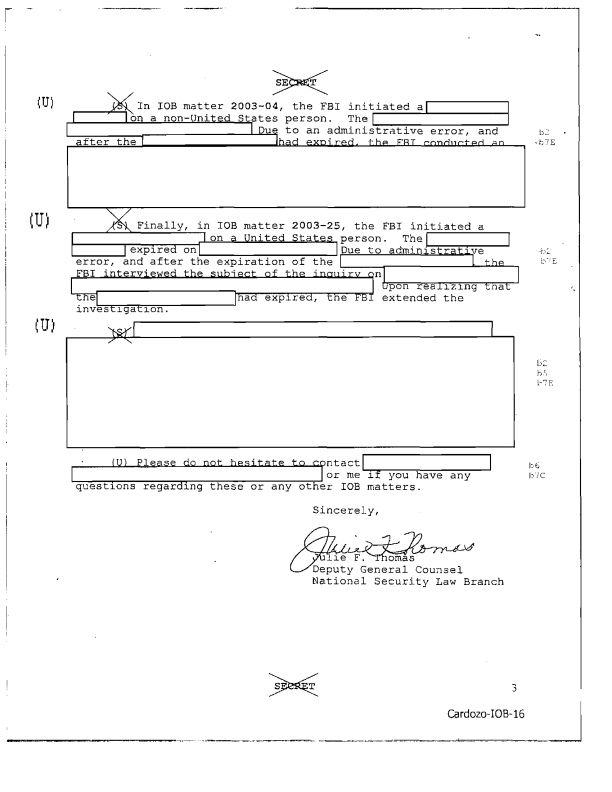
    ...to continuing to investigate a US person when the authority to do so had expired:

    In all cases involving violations of the NSIG, though, the FBI only reported to the IOB when it determined the agency's ability to supervise the investigation had been "substantially impaired."

    In a 2005 Washington Post article, a senior FBI official dismissed the severity of this type of violation, noting that the "vast majority of the potential [violations] reported have to do with administrative timelines and time frames for renewing orders."https://www.washingtonpost.com/wp-dyn/content/article/2005/10/23/AR2005102301... class="see_footnote">19 But these guidelines are much more than mere "administrative timelines": the NSIG exists in order to prevent intelligence agencies from invoking "national security" to monitor citizens engaging in constitutionally protected activities — exactly the type of monitoring the FBI was engaging in at the time (pdf).20

    Taken together, the FBI's disregard for its own internal oversight requirements and the Bureau's failure to timely report violations to the IOB undermined the safeguards established to protect civil liberties violations from occurring — the precise object of both the NSIG and the IOB.

    Abuse of National Security Letters

    In the reports disclosed to EFF, the second type of violation occurring with the most frequency involved FBI abuse of National Security Letters. These violations accounted for almost one-third of all reported violations. National Security Letters, or NSLs, are secret administrative subpoenas used by the FBI to obtain records from third-parties without any judicial review.https://www.eff.org/issues/national-security-letters." class="see_footnote">21 While NSLs have existed since the late-1970s, the USA PATRIOT Act greatly expanded the intelligence community's authority to issue NSLs. During the course of a terrorism or counterintelligence investigation, NSLs can be used to obtain just three types of records: (1) subscriber and "toll billing information" from telephone companies and "electronic communications services;"22 (2) financial records from banks and other financial institutions;23 and (3) consumer identifying information and the identity of financial institutions from credit bureaus.24

    The FBI's systemic abuse of NSLs has been well-documented — both by Justice Department investigations and through litigation and scrutiny of FBI practices by EFF. As noted above, in reports from 2007 and 2008, the Inspector General found that, between 2003 to 2006, the FBI may have committed as many as 6,400 violations of the FBI's NSL authority.25 According to the 2008 Report(pdf), from 2003 to 2006, the FBI issued nearly 200,000 NSL requests; almost 60% of the 49,425 requests issued in 2006 were for investigations of U.S. citizens or legal aliens.http://www.justice.gov/oig/special/s0803b/final.pdf." class="see_footnote">26

    Earlier scrutiny of FBI practices by EFF also revealed abuses of the Bureau's NSL authority. Documents obtained in a response to a 2007 EFF FOIA request showed that the FBI issued an NSL to North Carolina State University to obtain educational records, in clear violation of the FBI's statutory authority.https://www.eff.org/issues/foia/report-nsl-ncstate." class="see_footnote">27 EFF also filed a lawsuit challenging the legality of an NSL issued by the FBI to the Internet Archive.https://www.eff.org/cases/archive-v-mukasey." class="see_footnote">28 The government formally withdrew the NSL request in 2008.

    Analysis of the FBI's IOB reports released to EFF show that the Bureau committed violations involving NSLs for telephone and electronic communications records twice as often as it did for financial and credit records. While the FBI has publicly disclosed the total number of NSLs issued annually,http://www.justice.gov/oig/special/s0803b/final.pdf." class="see_footnote">29 the Bureau has refused to release the frequency with which the three individual types of NSLs were issued. However, if the rate at which the FBI's NSL violations occurred is an indicator of the frequency with which the three types of requests were issued, then, on average, the FBI likely issued approximately 25,000 NSL requests for telephone and electronic communications records, 12,500 requests for financial records, and 12,500 requests for credit information annually from 2003 to 2006.

    Perhaps most startling, however, was the frequency with which companies receiving NSLs — phone companies, internet providers, banks, or credit bureaus — contributed to the FBI's NSL abuse. In over half of all NSL violations reviewed by EFF, the private entity receiving the NSL either provided more information than requested or turned over information without receiving a valid legal justification from the FBI. Companies were all too willing to comply with the FBI's requests, and — in many cases — the Bureau readily incorporated the over-produced information into its investigatory databases.

    For example, in a violation reported in 2006, the FBI requested email header information for two email addresses used by a U.S. person:

    In response, the email service provider returned two CDs containing the full content of all emails in the accounts. The FBI eventually (and properly) sequestered the CDs, notified the email provider of the overproduction, and re-issued an NSL for the originally requested header information; but, in response to the second NSL, the email provider again provided the FBI with the full content of all emails in the accounts.

    Compounding the service providers' problematic over-disclosure, the scope of the FBI's authority to issue NSLs for electronic transactional records rests on unsettled and unclear legal grounds. The FBI's NSL authority under the Electronic Communications Privacy Act (ECPA) allows the government to issue NSLs to traditional telephone service providers for non-content subscriber information and toll billing records — essentially, the name, address, length of service, and local and long distance call records.30 ECPA also provides the authority to issue NSLs for "electronic communications transactional records." However, the exact scope of this remains unclear: according to the DOJ, "electronic communications transactional records" include "those categories of information parallel to . . . toll billing records for ordinary telephone service."http://www.fas.org/irp/agency/doj/olc/ecpa.pdf." class="see_footnote">31 What, exactly, "those categories of information" constitute — possibly including, for example, email "header" information, IP addresses, URLs, or other information — remains unclear.

    Third-parties not only willingly cooperated with FBI NSLs when the legal justification was unclear, however: they responded to NSLs without any legal justification at all. In one instance, when requesting financial records from a bank under the Right to Financial Privacy Act, the FBI used language and statutory citations from ECPA — a statute entirely unrelated to financial records — for its legal authority; nevertheless, the financial institution complied with the FBI's legally deficient request:

    In another series of violations, the FBI improperly requested and received full credit reports on subjects of counterintelligence investigations:

    The Fair Credit Reporting Act, the statute providing FBI authority to request credit information using an NSL, however, only provides that authority in terrorism investigations.32 In other violations, the FBI failed to certify, as required by statute, that the NSL was relevant to a terrorism investigation and not being used to investigate constitutionally protected activities:

    Again, despite the deficiency of the request, the third-party complied with the FBI's NSL.

    The FBI's abuse of its NSL power has garnered much of the attention in the debate over the FBI's abusive intelligence practices. What has not received as much attention, however, is the unwillingness of companies and organizations to guard their clients' and users' sensitive, personal information in the face of these NSL requests — whether the request was legally justifiable or not. Undeniably, if the FBI had complied with the law, the vast majority of NSL violations would never have occurred. Nevertheless, many of the businesses and organizations with which Americans trust their most private information are not applying any scrutiny to unjustifiable requests from the FBI and are not responding to valid requests in a responsible manner.

    Violations of the Constitution, FISA, and Other Legal Authorities

    The third category of FBI intelligence violations reported to the IOB, accounting for almost 20% of all reports, are violations of the Constitution, the Foreign Intelligence Surveillance Act (FISA), and other federal laws governing criminal investigations and intelligence-gathering activities. The first two types of intelligence violations committed by the FBI — violations of the NSIG and NSL abuse — were readily susceptible to categorization: these violations occurred with great frequency, and the violations were often repetitive and largely similar. On the other hand, violations falling into the third category were, in general, unique, and often flagrant, violations of a variety of legal authorities.

    Violations falling into this third category were consistently the most brazen and egregious violations. For example, in two separate incidents, the FBI reported to the IOB that its agents had made false statements in written declarations to courts:


    Another reported violation involved the FBI's use of improper evidence to obtain grand jury subpoenas:

    Other violations involved FBI's use of a target's username and password to access and download account information,

    ...and a warrantless search of password-protected files:

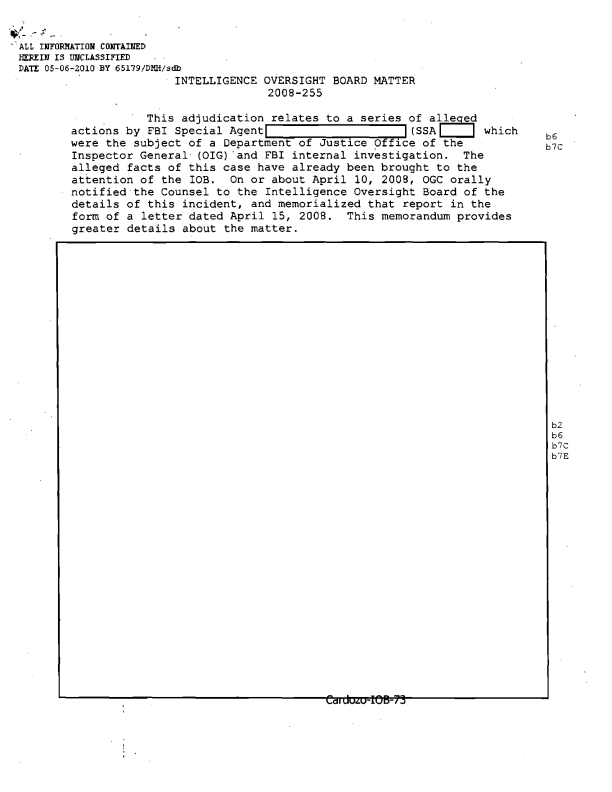
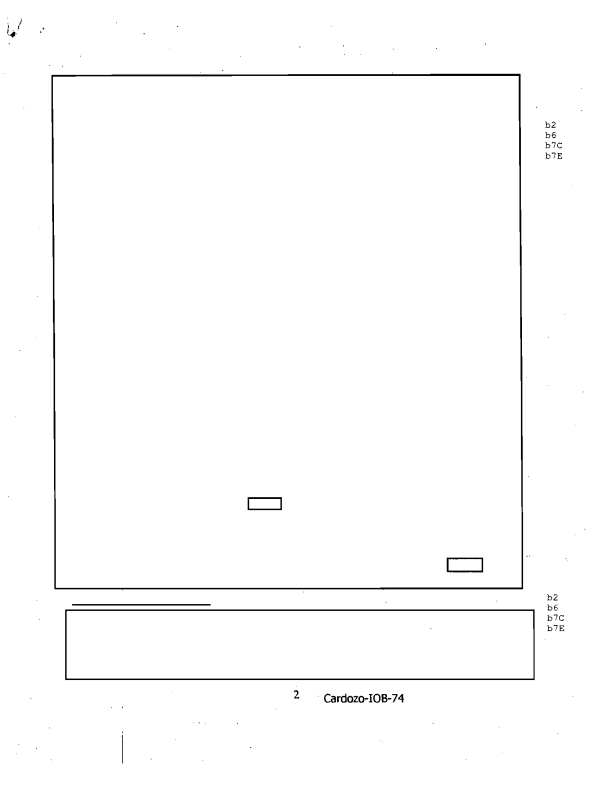
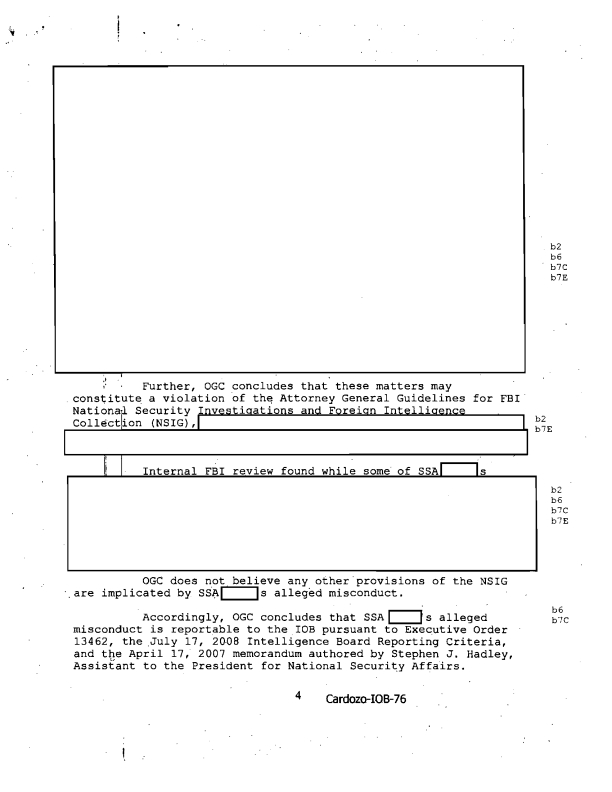
    Of the reports reviewed by EFF, however, this type of violation was also generally the most redacted. One four-page report (on average, most reports are only one or two paragraphs) is almost entirely redacted,

    with the exception of one paragraph that notes the "scope of [the FBI agent's] alleged offenses" warranted reporting to the IOB: the three pages detailing the offenses, however, are entirely redacted:

    Moreover, solely from the documents provided to EFF, it is evident that the FBI is withholding information on an inconsistent and arbitrary basis. For example, one IOB report, which details the issuance of NSLs without proper authority in the wake of the attacks on September 11th, was inadvertently included twice in the FBI's document release: one is nearly entirely redacted; the other, almost entirely free from redactions:

    Numerous documents throughout the FBI's release provide similar evidence of the agency's inconsistent and arbitrary practice of redacting and withholding documents.

    While the reports documenting the FBI's abuse of the Constitution, FISA, and other intelligence laws are troubling, EFF's analysis is necessarily incomplete: it is impossible to know the severity of the FBI's legal violations until the Bureau stops concealing its most serious violations behind a wall of arbitrary secrecy.

    Total Number of Violations from 2001 to 2008

    Both the frequency and type of violations revealed in the FBI's release to EFF are staggering. At a minimum, these documents already demonstrate the need for greater accountability and improved oversight mechanisms for American intelligence agencies. Yet, at the same time, the FBI continues to withhold critical information on the circumstances, rate of occurrence, and severity of these violations. And, if past experience is any guide, it is likely that the FBI is either withholding or failing to report many violations altogether.

    In the absence of robust auditing and full disclosure from the Bureau, the only method for approximating the scope of the FBI's abusive intelligence practices is to extrapolate from information contained within these releases and public statements made by government officials. The IOB reports, themselves, provide some insight into the sheer number of FBI intelligence violations. In previous litigation, EFF fought the FBI to release the IOB matter numbers that accompany every IOB report. While not every IOB "matter" is ultimately reported to the IOB, the numbers provide some indication of the number of violations investigated by the FBI. Based on IOB matter numbers on the reports released to EFF, it is clear that, at minimum, the FBI investigated approximately 7,000 instances of alleged misconduct from 2001 to 2008.

    The actual number of violations that occurred from 2001 to 2008, however, is likely much higher. The Inspector General has acknowledged that as many as 6,400 potential NSL violations may have occurred between 2003-2006;33 if the proportion of violations released to EFF is representative of all FBI intelligence violations during that time period, then the number of total violations during that four year time-period may have topped 17,000 — or an average of 4,250 serious intelligence violations per year. In the ten years since 2001, that total could approach 40,000 possible violations.34

    Conclusion

    From 2001 to 2008, the FBI frequently and flagrantly violated laws intended to check abusive intelligence investigations of American citizens. While many hoped the era of abusive FBI practices would end with the Bush Administration, there is little evidence that President Obama has taken significant measures to change past intelligence abuses. Two years into his term, the President has not publicly disclosed any appointments to the IOB, and his campaign promise of unprecedented transparency within the executive branch has gone largely unfulfilled — especially within the intelligence community.

    Congress, however, has an opportunity to remedy these abuses: portions of the USA PATRIOT Act expire in late February, and a bill has already been introduced in the House of Representatives to reauthorize it.35 Instead of simply rubber-stamping the intelligence community's continuing abuse of Americans' civil liberties, Congress should seize this opportunity to investigate the practices of the FBI and other intelligence agencies, and to demand greater accountability, disclosure, and reporting from these agencies. Until then, the FBI's pattern of misconduct will undoubtedly continue.

    1. 1. This figure is an estimate based, first, on the fact that a significant number of FBI violations went unreported, both internally and to the IOB; second, this estimate assumes the sample of violations reported to the IOB and released to EFF is representative of all violations that occurred from 2001-2011, including those that went unreported; third, the estimate assumes violations occurred at the same rate over time. In the reports released to EFF, roughly 33% were violations of the NSIG, 33% were NSL violations, and 20% were other violations (the remaining percentage of violations was too heavily redacted to categorize). The estimate is based on an extrapolation from the OIG's estimate that 6,400 NSL violations occurred from 2003-2006. In the absence of robust FBI auditing and thorough oversight, however, estimates are the only reasonable method to approximate the scope of the FBI's investigatory misconduct.
    2. 2. DEPARTMENT OF JUSTICE, OFFICE OF THE INSPECTOR GENERAL, A REVIEW OF THE FEDERAL BUREAU OF INVESTIGATION'S USE OF NATIONAL SECURITY LETTERS (March 2007).
    3. 3. See R. Jeffrey Smith, FBI Violations May Number 3,000, Official Says, WASH. POST, Mar. 21, 2007.
    4. 4. DEPARTMENT OF JUSTICE, OFFICE OF THE INSPECTOR GENERAL, A REVIEW OF THE FBI'S USE OF NATIONAL SECURITY LETTERS: ASSESSMENT OF CORRECTIVE ACTIONS AND EXAMINATION OF NSL USAGE IN 2006 (March 2008). Even before the OIG's official acknowledgement of FBI investigative abuses, EFF, other civil liberties organizations, and members of the media had documented numerous instances of improper government intelligence activities in the years following 9/11. For example, in 2005, a FOIA request seeking information about violations related to 13 national security investigations revealed numerous instances of FBI misconduct stemming from the Bureau's newly expanded powers under the USA PATRIOT Act.
    5. 5. President's Intelligence Advisory Board and Intelligence Oversight Board, PIAB History, http://www.whitehouse.gov/administration/eop/piab/history.
    6. >
    7. 6. Id.
    8. 7. President's Intelligence Advisory Board and Intelligence Oversight Board, About the PIAB, http://www.whitehouse.gov/administration/eop/piab/about.
    9. >
    10. 8. See, e.g., Exec. Order No. 13462 (Feb. 29, 2008), available at http://www.fas.org/irp/offdocs/eo/eo-13462.htm.
    11. >
    12. 9. John Solomon, In Intelligence World, a Mute Watchdog, WASH. POST, Jul. 15, 2007, available at https://www.washingtonpost.com/wp-dyn/content/article/2007/07/14/AR2007071400...>
    13. 10. Id.
    14. 11. Charlie Savage, President Weakens Espionage Oversight, BOS. GLOBE, Mar.14, 2008, available at http://www.boston.com/news/nation/washington/articles/2008/03/14/president_we...
    15. 12. Id.
    16. 13. Charlie Savage, Obama Order Strengthens Spy Oversight, N.Y. TIMES, Oct. 29, 2009, at A16, available at https://www.nytimes.com/2009/10/30/us/politics/30intel.html.
    17. >
    18. 14. A previous version of the NSIG, the Attorney General's Guidelines for FBI Foreign Intelligence Collection and Foreign Counterintelligence Collection ("FCIG") is referenced in some of the documents released from earlier years. The NSIG replaced the FCIG in October 2003.
    19. 15. A partially declassified version of the guidelines is available at http://www.fas.org/irp/agency/doj/fbi/nsiguidelines.pdf.
    20. >
    21. 16. See ELECTRONIC PRIVACY INFORMATION CENTER, THE ATTORNEY GENERAL'S GUIDELINES, available at http://epic.org/privacy/fbi/.
    22. >
    23. 17. The FBI operates under two separate sets of guidelines issued by the Attorney General: one for domestic investigations, one for national security and intelligence investigations. For a thorough treatment of the gradual expansion of the Attorney General's Domestic Guidelines, see EMILY BERMAN, BRENNAN CENTER FOR JUSTICE, DOMESTIC INTELLIGENCE: NEW POWERS, NEW RISKS (2011), available at http://www.brennancenter.org/content/resource/domestic_intelligence_new_power...>
    24. 18. Oversight of the Federal Bureau of Investigation: Hearing Before the Sen. Comm. on the Judiciary (May 2, 2006) (statement of Glenn A. Fine, Inspector General, U.S. Department of Justice), available at http://www.justice.gov/oig/testimony/0605.htm.
    25. >
    26. 19. Dan Eggen, FBI Papers Indicate Intelligence Violations, WASH. POST, Oct. 24, 2005, available at https://www.washingtonpost.com/wp-dyn/content/article/2005/10/23/AR2005102301...>
    27. 20. See, e.g., DEPARTMENT OF JUSTICE, OFFICE OF THE INSPECTOR GENERAL, A REVIEW OF THE FBI'S INVESTIGATIONS OF CERTAIN DOMESTIC ADVOCACY GROUPS (September 2010), available at http://www.justice.gov/oig/special/s1009r.pdf (describing FBI surveillance of various American advocacy groups from 2001 to 2006).
    28. 21. See Electronic Frontier Foundation, National Security Letters, https://www.eff.org/issues/national-security-letters.
    29. >
    30. 22. 18 U.S.C. § 2709.
    31. 23. 12 U.S.C. § 3414.
    32. 24. FBI has the authority to issue three different, but related, NSLs to credit agencies — an NSL pursuant to 15U.S.C. § 1681(u)(a) for the names of financial institutions with which the subject has an account; an NSL pursuant to 15 U.S.C. 1681(u)(b) for consumer identifying information; and an NSL pursuant to 15 U.S.C. § 1681(v) for a full credit report. The FBI may only request a full credit report while investigating international terrorism cases.
    33. 25. See Jason Ryan, FBI Search Abuses Could Number Thousands, ABC NEWS, Apr. 16, 2008, available at http://abcnews.go.com/TheLaw/DOJ/story?id=4661216&page=1.
    34. 26. DEPARTMENT OF JUSTICE, OFFICE OF THE INSPECTOR GENERAL, A REVIEW OF THE FBI'S USE OF NATIONAL SECURITY LETTERS: ASSESSMENT OF CORRECTIVE ACTIONS AND EXAMINATION OF NSL USAGE IN 2006 (March 2008), available at http://www.justice.gov/oig/special/s0803b/final.pdf.
    35. >
    36. 27. See Electronic Frontier Foundation, Report on the Improper Use of an NSL to NC State University, https://www.eff.org/issues/foia/report-nsl-ncstate.
    37. >
    38. 28. See Electronic Frontier Foundation, Internet Archive v. Mukasey, https://www.eff.org/cases/archive-v-mukasey.
    39. >
    40. 29. DEPARTMENT OF JUSTICE, OFFICE OF THE INSPECTOR GENERAL, A REVIEW OF THE FBI'S USE OF NATIONAL SECURITY LETTERS: ASSESSMENT OF CORRECTIVE ACTIONS AND EXAMINATION OF NSL USAGE IN 2006 (March 2008), available at http://www.justice.gov/oig/special/s0803b/final.pdf.
    41. >
    42. 30. See 18 U.S.C. § 2709(a).
    43. 31. See Department of Justice, Office of Legal Counsel, Requests for Information under the Electronic Communications Privacy Act (November 2008) at 3 n. 3, available at http://www.fas.org/irp/agency/doj/olc/ecpa.pdf.
    44. >
    45. 32. See 15 U.S.C. § 1681(v).
    46. 33. See Jason Ryan, FBI Search Abuses Could Number Thousands, ABC NEWS, Apr. 16, 2008, available at http://abcnews.go.com/TheLaw/DOJ/story?id=4661216&page=1.
    47. 34. This figure is an estimate based, first, on the fact that a significant number of FBI violations went unreported, both internally and to the IOB; second, this estimate assumes the sample of violations reported to the IOB and released to EFF is representative of all violations that occurred from 2001-2011, including those that went unreported; third, the estimate assumes violations occurred at the same rate over time. In the reports released to EFF, roughly 33% were violations of the NSIG, 33% were NSL violations, and 20% were other violations (the remaining percentage of violations was too heavily redacted to categorize). The estimate is based on an extrapolation from the OIG's estimate that 6,400 NSL violations occurred from 2003-2006. In the absence of robust FBI auditing and thorough oversight, however, estimates are the only reasonable method to approximate the scope of the FBI's investigatory misconduct.
    48. 35. H.R. 67, To extend expiring provisions of the USA PATRIOT Improvement and Reauthorization Act of 2005 and Intelligence Reform and Terrorism Prevention Act of 2004 until February 29, 2012 (introduced Jan. 5, 2011), available at http://www.thomas.gov/cgi-bin/query/z?c112:H.R.67.

    https://www.eff.org/pages/patterns-misconduct-fbi-intelligence-violations


    ^ed 
    Sent via iPhone

    FBI plans social network map alert mash-up application

    DailyDDoSe: FBI plans social network map alert mash-up application | THE UNHIVED MIND

    FBI plans social network map alert mash-up application | THE UNHIVED MIND

    The FBI is seeking to develop an early-warning system based on material "scraped" from social networks.

    It says the application should provide information about possible domestic and global threats superimposed onto maps "using mash-up technology".

    The bureau has asked contractors to suggest possible solutions including the estimated cost.

    Privacy campaigners say they are concerned that the move could have implications for free speech.

    The FBI's Strategic Information and Operations Center (SOIC) posted its "Social Media Application" market research request onto the web on 19 January, and it was subsequently flagged up by New Scientist magazine.

    The document says: "Social media has become a primary source of intelligence because it has become the premier first response to key events and the primal alert to possible developing situations."

    It says the application should collect "open source" information and have the ability to:
    Provide an automated search and scrape capability of social networks including Facebook and Twitter.
    Allow users to create new keyword searches.
    Display different levels of threats as alerts on maps, possibly using colour coding to distinguish priority. Google Maps 3D and Yahoo Maps are listed among the "preferred" mapping options.
    Plot a wide range of domestic and global terror data.
    Immediately translate foreign language tweets into English.

    The FBI says the information would be used to help it to predict the likely actions of "bad actors", detect instances of people deliberately misleading law enforcement officers and spot the vulnerabilities of suspect groups.
    Privacy permissions

    The FBI issued the request three weeks after the US Department of Homeland Security released a separate report into the privacy implications of monitoring social media websites.

    It justified the principle of using information that users have provided and not opted to make private.

    "Information posted to social media websites is publicly accessible and voluntarily generated. Thus the opportunity not to provide information exists prior to the informational post by the user," it says.

    It noted that the department's National Operations Center had a policy in place to edit out any gathered information which fell outside of the categories relevant to its investigations.

    It listed websites that the centre planned to monitor. They include YouTube, the photo service Flickr, and Itstrending.com – a site which shows popular shared items on Facebook.

    It also highlighted words it looked out for. These include "gangs", "small pox", "leak", "recall" and "2600″ – an apparent reference to the hacking-focused magazine.
    'Dragnet effect'

    The London-based campaign group, Privacy International, said it was worried about the consequences of such activities.

    "Social networks are about connecting people with other people – if one person is the target of police monitoring, there will be a dragnet effect in which dozens, even hundreds, of innocent users also come under surveillance," said Gus Hosein, the group's executive director.

    "It is not necessarily the case that the more information law enforcement officers have, the safer we will be.

    "Police may well find themselves overwhelmed by a flood of personal information, information that is precious to those it concerns but useless for the purposes of crime prevention."

    The group noted that it was seeking information from the UK's Metropolitan Police Service about its use of social networks.


    ^ed 
    Sent via iPhone

    Written testimony of NPPD for a House Committee on Oversight and Government Reform hearing titled “OPM: Data Breach” | Homeland Security

    Written testimony of NPPD for a House Committee on Oversight and Government Reform hearing titled "OPM: Data Breach" | Homeland Security

    Written testimony of NPPD Office of Cybersecurity & Communications Assistant Secretary Andy Ozment for a House Committee on Oversight and Government Reform hearing titled "OPM: Data Breach"

    2154 Rayburn House Office Building

    Chairman Chaffetz, Ranking Member Cummings, and members of the Committee, thank you for the opportunity to appear before you today. The Office of Personnel Management (OPM) compromise clearly demonstrates the challenge facing the Federal Government in protecting our citizens' and employees' personal information against sophisticated, agile, and persistent threats. Addressing these threats is a shared responsibility. I will discuss the Department's role in the recent compromise at OPM and how we are working with OPM and other agencies to accelerate improved cybersecurity across the Federal Government.

    The Role of the Department of Homeland Security in Federal Cybersecurity

    Cyber security, like physical security, requires layers of protections. The Federal Information Security Modernization Act of 2014 specifies that federal agencies are responsible for their own cybersecurity. Although agencies must take the lead in their own cybersecurity, as OPM is currently doing, DHS helps federal agencies protect their systems using two programs: (1) EINSTEIN, a perimeter protection program that detects and blocks threats attempting to access agencies' unclassified networks, and (2) Continuous Diagnostics and Mitigation (CDM), a DHS program that provides federal civilian agencies with tools to monitor agencies' internal networks. In addition, DHS has the mission to provide a common baseline of security across the civilian government and help agencies manage their cyber risk. DHS assists agencies by measuring and motivating agencies to implement best practices, by serving as a hub for information sharing, and by providing incident response assistance when agencies suffer a cyber intrusion.

    EINSTEIN

    Like a fence around a physical building, EINSTEIN protects agencies' unclassified networks at the perimeter of each agency. Furthermore, EINSTEIN provides situational awareness across the government, as threats detected in one agency are shared with all others so they can take appropriate protective action. The U.S. Government could not achieve such situational awareness through individual agency efforts alone.

    The first two versions of EINSTEIN – EINSTEIN 1 and 2 – identify abnormal network traffic patterns and detect known malicious traffic. This capability is fully deployed and screening all federal civilian traffic that is routed through a Trusted Internet Connection (a secure gateway between each agency's internal network and the Internet). EINSTEIN 3 Accelerated (EINSTEIN 3A), which actively blocks known malicious traffic, is currently being deployed through the primary Internet Service Providers serving the Federal Government. EINSTEIN 1 and 2 use only unclassified information, while EINSTEIN 3A uses classified information. Using classified indicators allows EINSTEIN 3A to detect and block many of the most significant cybersecurity threats. I am happy to discuss the Department's efforts to accelerate EINSTEIN 3A's deployment across the Federal civilian government, as well as the development of advanced malware and behavioral analysis capabilities that will automatically identify and separate suspicious traffic for further inspection, even if the precise indicator has not been seen before. We are examining best-in-class technologies from the private sector to evolve to this next stage of network defense. And as I will discuss later, EINSTEIN played a key role in understanding the recent compromise at OPM.

    Continuous Diagnostics and Mitigation (CDM)

    Security cannot be achieved through only one type of tool. EINSTEIN is a perimeter system, but it will never be able to block every threat. It must be complemented with systems and tools inside agency networks. Through the CDM program, DHS provides Federal civilian agencies with tools to monitor agencies' internal networks. I am happy to take any questions about how CDM protects networks and the role is play in cybersecurity, but first I want to address the current incident.

    DHS's Role in the OPM Compromise

    Leveraging the expertise and guidance provided by DHS, the Office of Personnel Management has spent the last year implementing improved cybersecurity capabilities across its networks. As a result, in April 2015, OPM became aware of a cybersecurity intrusion affecting one of its systems. As soon as OPM identified malicious activity on their network, they shared this information with the DHS National Cybersecurity and Communications Integration Center (NCCIC).

    The NCCIC then used one of our programs – EINSTEIN 2, the intrusion detection and situational awareness tool – to look back in time for other compromises across the federal civilian government. Through this process, the NCCIC identified a potential compromise at another location with OPM data. Since the incident was identified, OPM has partnered with various federal agencies, including DHS and the Federal Bureau of Investigation (FBI), to go onsite to investigate and mitigate the intrusion. At the same time, OPM immediately implemented additional security measures and continues to improve the security of the information it manages.

    In May 2015, during the investigation and in the process of applying mitigating controls provided by DHS, OPM identified evidence that personnel records for current and former federal employees had been compromised. This remains an active investigation, and DHS, the FBI, and other partners are working closely with OPM to determine the extent of the compromise and potential implications. Information regarding this incident may change as the investigation progresses.

    One of the important roles DHS plays is helping share information across agencies, and in some cases, with the private sector. For example, as soon as OPM identified malicious activity on their network, they shared this information with DHS. DHS then developed a signature for the particular threat, and used EINSTEIN 2 to look back in time for other compromises across the federal civilian government. This same threat information is used by EINSTEIN 3A to block potential threats from impacting federal networks. Thus, DHS is using EINSTEIN 3A to ensure that this cyber threat could not exploit other agencies protected by the system. DHS is accelerating EINSTEIN 3A deployment across the Federal Government. While it is challenging to estimate the potential impact of a prevented event, each of these malicious DNS requests or emails that were blocked by EINSTEIN 3A may conceivably have led to a cybersecurity compromise of severe consequence.

    DHS's Role in Federal Incident Reponses

    Cybersecurity is about risk management, and we cannot eliminate all risk. Agencies that implement best practices and share information will increase the cost for adversaries and stop many threats. But ultimately, there exists no perfect cyber defense, and persistent adversaries will find ways to infiltrate networks in both government and the private sector. When an incident does occur, the NCCIC offers on-site assistance to find the adversary, drive them out, and restore service. In Fiscal Year 2015, the NCCIC has already provided onsite incident response to 32 incidents – nearly double the total in all of Fiscal Year 2014. The NCCIC also coordinates responses to significant incidents to give senior leaders a clear understanding of the situation and give operators the information they need to respond effectively. Similar to the recent incident at OPM, providing on-site incident response assistance also allows the NCCIC to identify indicators of compromise that can then be shared with other agencies and applied to EINSTEIN for broad protection across the Federal Government.

    Cybersecurity Legislation

    Last year, Congress acted in a bipartisan manner to pass critical cybersecurity legislation that enhanced DHS's ability to work with the private sector and other federal civilian departments in each of their own cybersecurity activities, and enhanced the Department's cyber workforce authorities. DHS is using the authority granted in one of those bills – the Federal Information Security Modernization Act of 2014 – to direct Federal civilian Executive branch agencies to fix critical vulnerabilities on their Internet-facing devices through the recent issuance of a Binding Operational Directive.

    Additional legislation is needed. I previously highlighted EINSTEIN's key role in identifying and mitigating an additional potential compromise during the OPM activity. The Department and Administration have a longstanding request of Congress to remove obstacles to the EINSTEIN program's deployment across federal civilian agency information systems by codifying the program's authorities and resolving lingering concerns among certain agencies. Some agencies have questioned how deployment of EINSTEIN under DHS authority relates to their existing statutory restrictions on the use and disclosure of agency data. DHS and the Administration are seeking statutory changes to clarify this uncertainty and to ensure agencies understand that they can disclose their network traffic to DHS for narrowly tailored purposes to protect agency networks, while making clear that privacy protections for the data will remain in place. I look forward to working with Congress to further clarify DHS's authority to rapidly and efficiently deploy this protective technology.

    In addition, carefully updating laws to facilitate cybersecurity information sharing within the private sector and between the private and government sectors is also essential to improving the Nation's cybersecurity. While many companies currently share cybersecurity threat information under existing laws, there is a heightening need to increase the volume and speed of information shared without sacrificing the trust of the American people or the protection of privacy, confidentiality, civil rights, or civil liberties. It is essential to ensure that cyber threat information can be collated quickly in the NCCIC, analyzed, and shared quickly among trusted partners, including with law enforcement, so that network owners and operators can take necessary steps to block threats and avoid damage.

    Conclusion

    Federal agencies are a rich target and will continue to experience frequent attempted intrusions. This problem is not unique to the Federal Government – it is shared across a global cybersecurity community. The key to good cybersecurity is awareness and constant vigilance at machine speed. As our detection methods continue to improve, more events will come to light. The recent breach at OPM is emblematic of this trend, as OPM was able to detect the intrusion by implementing cybersecurity best practices recommended by DHS. As network defenders are able to see and thwart more events, we will inevitably identify more malicious activity and disappoint the adversary's attempts to access sensitive information and systems. We are facing a major challenge in protecting our most sensitive information against sophisticated, well-resourced, and persistent adversaries. In response, we are accelerating deployment of the tools we have and are working to bring cutting-edge capabilities online. And we are asking our partner agencies and Congress to take action and work with us to strengthen the cybersecurity of Federal agencies.


    Sent via iCloud