Tuesday, August 13, 2019

Hypothalamus Regions and Function in the Body

Hypothalamus Regions and Function in the Body

Hypothalamus Regions and Function in the Body

hypothalamus
Roger Harris/Getty Images

If the brain were a corporation, the hypothalamus would kind of be like the "utilities" department. While a lot of the credit and attention goes towards parts of the brain that communicate, create, and act, the hypothalamus is responsible for heating, water flow, and other basic things that keep the entire system running.

The basic function of the hypothalamus can be summarized with the word homeostasis, which means keeping the internal state of the body as constant as possible. The hypothalamus keeps us from being too hot, too cold, overfed, underfed, too thirsty, and so on.   

While the hypothalamus is generally responsible for keeping us in a steady state, there are times that this state needs to change. When in an immediately life-threatening situation, you may not need to think about how hungry you are. The limbic system, which is intricately involved with emotion, communicates closely with the hypothalamus, resulting in the physical changes that are associated with particular feelings. The amygdala has reciprocal connections with the hypothalamus through at least two major pathways.

Other regions of cortex, such as the orbitofrontal cortex, insula, anterior cingulate and temporal cortices also communicate with the hypothalamus.

Regions of the Hypothalamus

Like the rest of the brain, different areas of the hypothalamus perform different functions. These areas can be distinguished by their connections to the rest of the brain. For example, the hypothalamus is divided in half by fibers of a white matter tract called the fornix, which runs from the front of the hypothalamus towards the back.

The parts of the hypothalamus closer to the inside of the brain (the medial side) communicate closely with part of the amygdala through another tract called the stria terminalis. The amygdala helps to signal fear, and the medial aspect of the hypothalamus is involved with a "fight-or-flight" response, for example by limiting appetite. There's no time to rest and digest if you're about to run for your life!

The side of the hypothalamus that is closest to the outside of the brain (the lateral side) has the opposite effect on appetite. Because this area is important in stimulating appetite, lesions in this area can lead to severely decreased body weight. This area is also important in thirst, as lesions of the more frontal part can lead to decreased water intake.

The functionality of the hypothalamus is also divided from front to back. For example, anterior parts of the hypothalamus seem more involved with cooling the body off by increasing blood flow to the skin and causing sweat to be produced. The back of the hypothalamus is more involved with keeping the body warm.

In addition, the hypothalamus is responsible for regulating our natural cycle of wakefulness and sleep. The suprachiasmatic nucleus at the front of the hypothalamus serves as our internal clock, letting us know when it's bedtime. This part of the brain is connected with light-sensitive regions that adjust our internal clock to daylight.

How Does the Hypothalamus "Talk" to the Body?

The hypothalamus modulates physical responses by communicating with the body through two routes. The first route is through the autonomic nervous system. The second is through the endocrine system, meaning the secretion of hormones into the bloodstream.

Autonomic fibers primarily come from the paraventricular nucleus of the hypothalamus, but also from the dorsomedial hypothalamic nucleus and from the lateral and posterior hypothalamus. Initially, these autonomic fibers travel in a white matter path called the medial forebrain bundle. They then pass on into the dorsolateral brainstem and periaqueductal gray matter. The fibers synapse on parasympathetic nuclei in the brainstem and intermediate zone of the sacral spinal cord, and on sympathetics in the intermediolateral cell column of the thoracolumbar spinal cord.

Many autonomic nuclei in the brainstem receive inputs from the hypothalamus, such as the nucleus solitarius, noradrenergic nuclei, raphe nucleus, and pontomedullary reticular formation.

The hypothalamus also works in conjunction with the pituitary gland to control the body's endocrine system. The pituitary has the ability to secrete hormones directly into the bloodstream. This is a rare example of a place where the blood-brain barrier normally designed to keep infections from crossing into the brain is absent from the brain's architecture.

Some hormones, such as oxytocin and vasopressin, are made directly in the hypothalamus (in the paraventricular and supraoptic nuclei, for example), and secreted near the back of the pituitary. The anterior part of the pituitary contains cells that make their own hormones. These hormones are regulated by other neurological secretions which are passed down nerve fibers into a vascular plexus, where they are released by the blood. All of these hormonal secretions are regulated by negative feedback loops, meaning that the brain is able to detect when levels of the hormone are high ​and decrease production as a result.

This may seem enormously complicated, and it is. But the ultimate task of homeostasis even in the face of adversity is well worth it!


Sent from my iPhone

Functions of the Limbic System

Functions of the Limbic System

Functions of the Limbic System

Brain head scan
Roxana Wegner / Getty Images

In 1878 Paul Broca, the French neurologist famous for so-called Broca's aphasia, coined the term "le grand lobe lymbique." The term "limbus" refers to a margin or rim. Dr. Broca was referring to the structures that surround the innermost part of the brain, at the margin of the brain's center.

Meaning of the Limbic System

The meaning of the term "limbic system" has changed since Broca's time. It is still meant to include structures between the cortex and the hypothalamus and brainstem, but different specialists have included different structures as part of the limbic system. The amygdala and hippocampus are widely included, as is the olfactory cortex.  From there, however, opinions diverge as to what is considered part of the limbic system, and what is paralimbic, meaning a structure that interacts closely with the limbic system but is not truly part of it.

What Does the Limbic System Do?

The limbic system serves a variety of fundamental cognitive and emotional functions. The hippocampi, which lay on the inside edge of the temporal lobes, is essential to memory formation. The amygdalae sit on top of the front portion of each hippocampus. Each amygdala is thought to be important in processing emotion. The amygdala communicates closely with the hippocampus, which helps explain why we remember things that are more emotionally important. The amygdala also communicates closely with the hypothalamus, the area of the brain that is responsible for regulating temperature, appetite, and several other basic processes required for life.

 The hypothalamus itself is sometimes, but not always, included as part of the limbic system. Through the hypothalamus, as well as some key areas in the brainstem, the limbic system communicates with our autonomic nervous system (which regulates things like heartbeat and blood pressure), endocrine system, and the viscera (or "gut"). 

Nerve cells in the brain are organized in different fashions depending on location. The cerebral cortex is predominantly neocortical, meaning that cells exist in 6 layers. This is different from the limbic system, where cells are either arranged in fewer layers (e.g. paleocorticoid), or more jumbled (corticoid). This less complex organization of the limbic system, as well as the limbic system's control of fundamental processes of life, has led doctors to believe that the limbic structure is evolutionarily older than the cerebral cortex.

Paralimbic Structures

The paralimbic structures form a complex network with the limbic system. Examples of paralimbic structures include the cingulate gyrus, orbitofrontal cortex, temporal pole, and part of the insula. The basal forebrain, nucleus accumbens, mammillary bodies and parts of the thalamus (the anterior and mediodorsal nuclei) are also often considered paralimbic structures due to their close interaction with the limbic system. 

Each of these paralimbic structures has been connected with emotion or basic cognitive processes. The anterior cingulate gyrus, for example, has been tied to motivation and drive. The insula is connected with our ability to sense our own internal sensations (or "gut feelings"). The orbitofrontal cortex, nucleus accumbens, and basal forebrain are involved with sensations of pleasure or reward. The mammillary bodies and some thalamic nuclei are important to the formation of new memories.  

All of these pathways are intricately connected. The amygdala, for example, communicates to the orbitofrontal pathway through a white matter bundle called the uncinate fasciculus, as does the insula. The amygdala communicates to parts of the hypothalamus and cingulate through the stria terminalis, and to the brainstem and several other structures through the ventral amygdalofugal pathway. The hippocampus largely communicates through a large white matter pathway called the fornix, which curves around the ventricles of the brain towards the mammillary bodies, sending out branches to the mammillary bodies, thalamus, and cingulate along the way.

The limbic system is a heterogeneous group of structures and serves many different functions. Those functions are fundamental to how we think, feel, and respond to the world around us. 


Sent from my iPhone

Hippocampus Role in the Limbic System

Hippocampus Role in the Limbic System

Hippocampus Role in the Limbic System

Hippocampus
The hippocampus (red), a limbic system structure, is responsible for long-term memory. Credit: Sciepro/Getty Images

The hippocampus is a small, curved formation in the brain that plays an important role in the limbic system. The hippocampus is involved in the formation of new memories and is also associated with learning and emotions.

Because the brain is lateralized and symmetrical, you actually have two hippocampi. They are located just above each ear and about an inch-and-a-half inside your head.

How Does the Hippocampus Affect Memory?

The hippocampus plays a critical role in the formation, organization, and storage of new memories as well as connecting certain sensations and emotions to these memories. Have you ever noticed how a particular scent might trigger a strong memory? It is the hippocampus that plays a role in this connection.

Research has also found that different subregions of the hippocampus itself play important roles in certain types of memory. For example, the rear part of the hippocampus is involved in the processing of spatial memories. Studies of London cab drivers have found that navigating complex mazes of big city streets is linked to the growth of the rear region of the hippocampus.

The hippocampus also plays a role in consolidating memories during sleep. Studies suggest that greater hippocampal activity during sleep following some sort of training or learning experience leads to better memory of the material the following day.

This doesn't mean that memories are themselves stored in the hippocampus for the long term. Instead, it is believed that the hippocampus acts as something of a shipping center, taking in information, registering it, and temporarily storing it before shipping it off to be filed and stored in long-term memory. Sleep is believed to play a critical role in this process.

When the Hippocampus Is Damaged

Because the hippocampus plays such an important role in the formation of new memories, damage to this part of the brain can have a serious long-term impact on certain types of memory. Damage to the hippocampus has been observed upon post-mortem analysis of the brains of individuals with amnesia. Such damage is linked to problems with forming explicit memories such as names, dates, and events.

The exact impact of damage can vary depending on which hippocampus has been affected. Research suggests that damage to the left hippocampus has an effect on the recall of verbal information while damage to the right hippocampus results in problems with visual information.

Age can also have a major impact on the functioning of the hippocampus. MRI scans of human brains have found that the human hippocampus shrinks by around 13 percent between the ages of 30 and 80. Those who experience such a loss may show significant declines in memory performance. Cell degeneration in the hippocampus has also been linked to the onset of Alzheimer's disease.


Sent from my iPhone

Sunday, July 28, 2019

Why the NSA Should Delete Its Data on Americans - The Atlantic

Why the NSA Should Delete Its Data on Americans - The Atlantic
Can I get a copy first please?


The NSA Should Delete Its Trove of Data on Americans

It cannot reliably protect even its most closely guarded secrets from adversaries. There is no reason to trust it to store years of details about private citizens' communications, too.

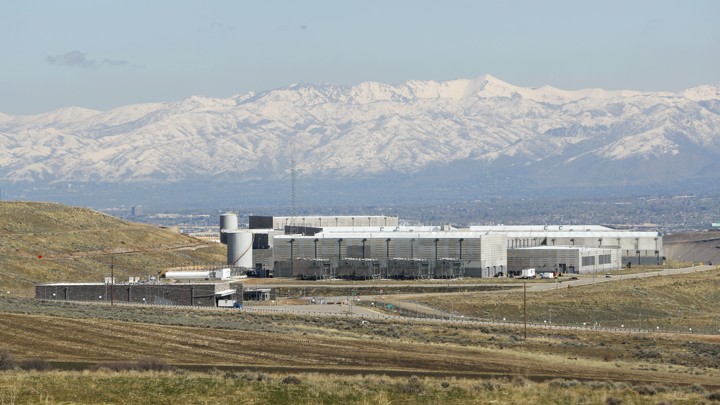
The NSA data center in Bluffdale, UtahGeorge Frey / Reuters

Fifteen months ago, a group called the Shadow Brokers began to taunt the National Security Agency with proof of an extraordinary breach: By unknown means, operatives had infiltrated its operations and stolen its most potent cyber weapons. Developed by the U.S. government to penetrate or attack adversaries, those weapons were then used to attack millions of innocents worldwide.

Future attacks are "all but certain," The New York Times reported while revisiting the matter over the weekend, yet the NSA still doesn't know exactly what was taken, or whether its defenses were breached by an outside hacker or an insider.

Some fear a mole remains inside the intelligence agency even today.

"The leaks have renewed a debate over whether the NSA should be permitted to stockpile vulnerabilities it discovers in commercial software to use for spying rather than immediately alert software makers so the holes can be plugged," the Times wrote. "The agency claims it has shared with the industry more than 90 [percent] of flaws it has found, reserving only the most valuable for its own hackers. But if it can't keep those from leaking, as the last year has demonstrated, the damage to businesses and ordinary computer users can be colossal."

* * *

Software vulnerabilities aren't the only thing that the NSA stockpiles. Four years ago, the American public learned that the agency hoovers up metadata pertaining to the private communications of most every adult in this country.

After the Edward Snowden leaks, the Obama administration insisted that the costs of collecting and storing metadata on phone calls, texts, and emails was outweighed by the benefits. Sure, the trove that the government was amassing indicated countless sensitive calls, like those to abortion clinics, suicide hotlines, and oncologists; and it could expose a person's entire web of acquaintances.

But procedural safeguards would prevent violations of privacy, NSA defenders insisted. NSA analysts wouldn't enjoy unfettered access to the entire haul. Rather, they would be permitted to submit discrete queries, like a phone number found in a terrorist safe house. And if their database in fact contained information on that target, they'd still be limited by a constraint that they could only look at other phone numbers within two or three "hops" of the target.

NSA critics challenged the accuracy and adequacy of the safeguards, as well as the government's underlying presumption: that an American's privacy wasn't in fact impinged upon if the government merely gathered and stored information about their communications, so long as no one subsequently looked at it.

A different concern was scarcely broached: What if the U.S. government never itself abused the system it built, but failed to safeguard its contents?

The likelihood of the trove's eventual theft strikes me as significant (and that is assuming that a foreign government or group of hackers hasn't already gotten any of it). The NSA failed to stop Snowden from taking some of its most closely held secrets. It failed to stop the Shadow Brokers from taking some of its most closely held cyber weapons and deploying them against innocents, including Americans. Why expect it to successfully safeguard its most closely held trove of metadata?

Per the Times, "NSA employees say that with thousands of employees pouring in and out of the gates, and the ability to store a library's worth of data in a device that can fit on a key ring, it is impossible to prevent people from walking out with secrets."

According to the report, after the NSA's stockpile of offensive weapons leaked, the consequences included the following:

Millions of people saw their computers shut down by ransomware, with demands for payments in digital currency to have their access restored. Tens of thousands of employees at Mondelez International, the maker of Oreo cookies, had their data completely wiped. FedEx reported that an attack on a European subsidiary had halted deliveries and cost $300 million. Hospitals in Pennsylvania, Britain, and Indonesia had to turn away patients. The attacks disrupted production at a car plant in France, an oil company in Brazil, and a chocolate factory in Tasmania, among thousands of enterprises affected worldwide. American officials had to explain to close allies—and to business leaders in the United States—how cyber weapons developed at Fort Meade in Maryland came to be used against them.

Now consider the potential costs and consequences if the NSA's stockpile of metadata on American citizens were to be breached by hackers or stolen by an insider, and then come under the control of Russia or China or North Korea or terrorists.

Chaos-loving Russian trolls could take to Facebook, Twitter, and Reddit to post phone numbers of millions who called abortion clinics, addiction and suicide hotlines, and tip lines to anonymously report crime to the FBI or local cops. China's government could map the business networks of American corporations expected to be in high-stakes economic competition with Chinese firms. I'll refrain from giving terrorists specific ideas about how they might exploit such information, but I can think of several frightening ways off the top of my head.

To collect and store all this information about U.S. citizens in one place would create a vulnerability even if it was protected by bureaucrats with a good record of data security.

To keep it in the hands of the NSA, given its track record, is folly. All data the NSA retains on Americans should be erased now before it falls into the wrong hands. And Congress should pass data-retention laws that force categories of private corporations, which are often even less capable of safeguarding the data that they amass, to purge whole categories of sensitive information at regular intervals. How many breaches must we witness to give up on securing and start deleting?


We want to hear what you think about this article. Submit a letter to the editor or write to letters@theatlantic.com.


Friday, July 12, 2019

Facebook Stored Hundreds of Millions of User Passwords in Plain Text for Years — Krebs on Security

Facebook Stored Hundreds of Millions of User Passwords in Plain Text for Years — Krebs on Security

Facebook Stored Hundreds of Millions of User Passwords in Plain Text for Years

Hundreds of millions of Facebook users had their account passwords stored in plain text and searchable by thousands of Facebook employees — in some cases going back to 2012, KrebsOnSecurity has learned. Facebook says an ongoing investigation has so far found no indication that employees have abused access to this data.

Facebook is probing a series of security failures in which employees built applications that logged unencrypted password data for Facebook users and stored it in plain text on internal company servers. That's according to a senior Facebook employee who is familiar with the investigation and who spoke on condition of anonymity because they were not authorized to speak to the press.

The Facebook source said the investigation so far indicates between 200 million and 600 million Facebook users may have had their account passwords stored in plain text and searchable by more than 20,000 Facebook employees. The source said Facebook is still trying to determine how many passwords were exposed and for how long, but so far the inquiry has uncovered archives with plain text user passwords dating back to 2012.

My Facebook insider said access logs showed some 2,000 engineers or developers made approximately nine million internal queries for data elements that contained plain text user passwords.

"The longer we go into this analysis the more comfortable the legal people [at Facebook] are going with the lower bounds" of affected users, the source said. "Right now they're working on an effort to reduce that number even more by only counting things we have currently in our data warehouse."

In an interview with KrebsOnSecurity, Facebook software engineer Scott Renfro said the company wasn't ready to talk about specific numbers — such as the number of Facebook employees who could have accessed the data.

Renfro said the company planned to alert affected Facebook users, but that no password resets would be required.

"We've not found any cases so far in our investigations where someone was looking intentionally for passwords, nor have we found signs of misuse of this data," Renfro said. "In this situation what we've found is these passwords were inadvertently logged but that there was no actual risk that's come from this. We want to make sure we're reserving those steps and only force a password change in cases where there's definitely been signs of abuse."

A written statement from Facebook provided to KrebsOnSecurity says the company expects to notify "hundreds of millions of Facebook Lite users, tens of millions of other Facebook users, and tens of thousands of Instagram users." Facebook Lite is a version of Facebook designed for low speed connections and low-spec phones.

Both Github and Twitter were forced to admit similar stumbles in recent months, but in both of those cases the plain text user passwords were available to a relatively small number of people within those organizations, and for far shorter periods of time.

Renfro said the issue first came to light in January 2019 when security engineers reviewing some new code noticed passwords were being inadvertently logged in plain text.

"This prompted the team to set up a small task force to make sure we did a broad-based review of anywhere this might be happening," Renfro said. "We have a bunch of controls in place to try to mitigate these problems, and we're in the process of investigating long-term infrastructure changes to prevent this going forward. We're now reviewing any logs we have to see if there has been abuse or other access to that data."

Facebook's password woes come amid a tough month for the social network. Last week, The New York Times reported that federal prosecutors are conducting a criminal investigation into data deals Facebook struck with some of the world's largest tech companies.

Earlier in March, Facebook came under fire from security and privacy experts for using phone numbers provided for security reasons — like two-factor authentication — for other things (like marketing, advertising and making users searchable by their phone numbers across the social network's different platforms).

Update, 11:43 a.m.: Facebook has posted a statement about this incident here.

Tags: , ,

This entry was posted on Thursday, March 21st, 2019 at 11:17 am and is filed under A Little Sunshine, The Coming Storm. You can follow any comments to this entry through the RSS 2.0 feed. Both comments and pings are currently closed.


Elyssa D. Durant
Policy & Research Analyst